 |
|
Research Shows Strong Support for Energy Production & Enefit’s Utah Project
|
|
Most Utahns (and residents of a handful of western Colorado towns near Enefit’s Utah Project) believe that energy production is very important to the local economy and large majorities say they have a favorable opinion of planned oil shale projects in eastern Utah. What’s more, those in areas nearest Enefit’s proposed project overwhelming support it.
In opinion research conducted for Enefit American Oil in September and October, we found that most respondents could accurately describe what oil shale is, a bit of a surprise given the confusion with “fracking/hydraulic fracturing” and “shale oil/tight oil” that we often encounter.
|
We were pleased to see there is good awareness of the several oil shale projects planned for the Uintah Basin, with more than half of Utahns statewide (55%) saying they knew about them. At 84%, awareness of oil shale projects in the Basin is much higher.
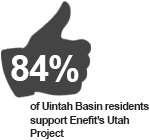
When asked specifically if they would support Enefit’s Utah Project, 59% of Utahns statewide and 84% of those in the Uintah Basin said yes. Achieving energy independence and providing jobs and other economic benefits were cited as the main reasons for people’s support.
We conducted the research among 605 people throughout Utah to mirror the state’s population and demographic distribution. Another 210 people – residents of Utah’s Uintah Basin and nearby towns in western Colorado’s Rio Blanco and Moffat counties – were contacted to determine if there are any major differences between opinions statewide and those in the area of greatest impact and benefit of Enefit’s proposed project.
|
|
Enefit Works with Stakeholders to Conserve Unique Plant Species
|
|
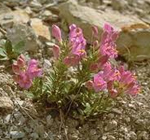
Enefit American Oil staff are working with a variety of government agencies and others to create a conservation plan for two species of penstemon, a flowering plant that lives on or near the harsh habitat of oil shale outcrops in and around the Uintah Basin. The idea is to develop a workable solution that protects the plants and prevents them from being listed as threatened or endangered by the federal government, an action that could significantly impact the development of not only oil shale, but other energy and mineral resources in the basin and beyond.
|
|
We conducted a baseline survey last summer on our proposed project site and utility corridor to determine where these plants are located and how many there are. We’ve shared that information with the U.S. Fish and Wildlife Service, the Bureau of Land Management, Uintah County, State of Utah Public Lands Office, and others, and we’ll continue to work with these groups this year with the goal to craft a feasible and effective conservation plan.
|
|
Congratulations to Red Leaf on Securing Permits for Its Utah Oil Shale Project
|
|
The first-large scale oil shale operation in the United States has been green-lighted by Utah regulators; mining operations are set to begin this spring. Red Leaf Resources’ oil shale project in the southern Uintah Basin received a groundwater permit in mid-December, which will allow it to begin construction on its proprietary EcoShale capsules. Red Leaf’s process is rather distinct from Enefit’s and involves placing mined oil shale in large pits lined with clay and bentonite and heating the ore at 725 degrees Fahrenheit for several months to convert the kerogen to oil and natural gas. The lighter fractions of crude oil are then pumped from the capsule and the process is begun anew with another pit nearby.
|
Red Leaf’s project is located on state of Utah land about 25 miles/40kms west of Enefit’s Utah Project site. The company intends to eventually reach a production level of 10,000 barrels a day by mid-2015.
Relatedly, London-based TomCo Energy has filed permit applications to open an oil shale mine on state-owned land near Red Leaf’s project. TomCo licenses the EcoShale technology and is also planning a 10,000 bpd operation.
|
| |


